Observational Science – Teaching without words

Posted in Research and Projects with tags , , , , , on November 8, 2012 by Brit Cruise

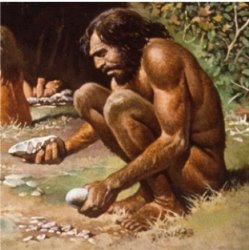
Lately I have been thinking about ways of blending various aspects of history into math/science lessons on Khan Academy. The traditional model of: lesson, experiment, lesson, experiment makes sense – though it’s important to do the experiment part in a natural way. All experiments begin with observations in the real world. So, I’m going to make a series of short silent videos which reenact observations made by our ancestors and first inventions/technologies which result.

Later on, lessons using modern technology can reference these videos (Karl mentioned we could call them Building Blocks) as experimental foundations everyone can understand. In this case I begin with a simple video of someone finding rocks in a river with seemingly magical properties. Then these properties are harnessed to create new things. This will lead us into electromagnetism, and more modern inventions such as the telegraph. Check out the progress here

Prime Number Theorem: logarithmic density

Posted in Video / Theatre with tags , , , , on November 2, 2012 by Brit Cruise

This video is an attempt to explain the Prime Number Theorem in a way that gives you a tactile intuition regarding the density of primes. It’s an idea Gauss is famous for having at the age of 16 while studying tables of prime numbers < size (x). The idea for this video came to me while walking in the forest and noting the gradual shift in leaf density as I moved away from the trees. I thought it could be a nice way to introduce density gradient.

More importantly, check out the amazing visualization that Khan Academy user Peter Collingridge made to follow up the video:

http://www.khanacademy.org/cs/spiral-sieve-of-eratosthenes/1125572884

The Origins of Written Language

Posted in Video / Theatre with tags , , , , , , , , , on October 15, 2012 by Brit Cruise

In order to understand the origin of an alphabet we must first forget everything we know.

What would happen if we traveled back 50,000 years to meet our ancestors? How would we communicate with them?

This video reintroduces us to cave art, pictograms, ideograms and the rebus principle:

Information Theory: The Language of Coins

Posted in Video / Theatre with tags , , on September 15, 2012 by Brit Cruise

I’ll never forget the first time I was introduced to Information Theory. My TA Mike Burrel began a lecture by writing a string of 0’s and 1’s on the board and asked us to think about what it meant. It was followed by a trance-like state of excitement…how did I not hear of this before? Three years later I’m thrilled to be launching an entire episode on the topic. It was a true joy to go back to square one and relearn the topic with a childlike curiosity…My goal is to create a Myst inspired adventure which includes various puzzles along the way.

Episode #2: The Language of Coins

RSA Encryption Algorithm: Complimentary Colors & Trapdoors

Posted in Video / Theatre with tags , , , , , on July 30, 2012 by Brit Cruise

Figuring out a brief way to explain how & why the RSA encryption algorithm works was a daunting task. My goal was to find a balance between a rigorous 2+ hour technical explanation (for this I’d suggest Dan Boneh’s crypto course) and a simplified intuitive example.  I came up… Continue reading

Magic in the classroom: teaching our ancestors

Posted in Research and Projects with tags , , , , on July 18, 2012 by Brit Cruise

When I have an idea for how to teach something I always ask myself if it’s the best way to teach a distant, yet equally intelligent, ancestor…

Continue reading

Perfect Secrecy & Pseudorandomness

Posted in Video / Theatre with tags , , , , , on May 4, 2012 by Brit Cruise

Check out my interactive exploration of random walks on khanacademy labs.

When someone rolls dice, or selects a card from a shuffled deck the best possible strategy for predicting the outcome can’t beat a blind guess. This is because each outcome is equally likely. When we apply random shifts to our messages it results in a ciphertext which is indistinguishable from any other message – it contains no information. The problem with this method of encryption (one-time pad) is that we must share all the random shifts in advance. What happens when we apply pseudorandom shifts instead? We can relax our definition of perfect secrecy and achieve practical security

Khan Academy Labs: Exploratory Exercises

Posted in Research and Projects with tags , , on March 30, 2012 by Brit Cruise

One of the most exciting aspects of joining the Khan Academy team, was the potential to explore new ways of integrating video and software. Continue reading

WW2 Encryption Machines – Key Spaces

Posted in Video / Theatre with tags , , , , , , , on March 13, 2012 by Brit Cruise

Over the past few weeks was editing a video which Continue reading

Public Key Cryptography: Diffie-Hellman Key Exchange

Posted in Video / Theatre with tags , , , , on February 26, 2012 by Brit Cruise

Continue reading

2000 years of Cryptography in 8.5 minutes

Posted in Video / Theatre with tags , , , , , , , on February 14, 2012 by Brit Cruise

This video covers this history of Cryptography through the lens of Cryptanalysis. It takes us from the Caesar Cipher to the one-time pad…a daunting task in 8 minutes. My strategy for this was based on much reflection after completing a course in Cryptography last year…I was seeking out the kernel of what is required to understand the big picture. This brought me to analogies which connect the idea of a fingerprint to unique frequency distribution, and information leak to differentials in the distribution. Hopefully this lends some intuitive weight when I explain the strength of the one-time pad…which is a lovely concept.

Khan Academy and Brit Cruise join forces

Posted in Uncategorized with tags , on January 13, 2012 by Brit Cruise

Today I have some very exciting news. Over the holidays Sal Khan from Khan Academy expressed interest in my videos after viewing my YouTube page (which was a project I initially launched on Kickstarter). The Khan Academy is a not-for-profit educational organization with the goal of educating the world for free (with some serious funding help from Google and the Bill and Melinda Gates foundation). They are a small team with a big dream. Within 8 hours of his phone call I quit my job(s)…as of this moment I am working for Khan Academy. My job? “Continue making your videos”. I look forward to some exciting collaborations…and maybe hybrid exercise-video adventures! Here is the first video I delivered to Khan.

You can keep up with my latest videos by subscribing to my YouTube page here.

Gambling with Secrets – Pilot Episode

Posted in Uncategorized with tags , , , , on December 14, 2011 by Brit Cruise

Finally, here are the opening chapters of the Art of the Problem pilot I’ve been working on:

Gambling with Secrets

[youtube-“http://www.youtube.com/watch?v=2y3PH4SqmlA”%5D

Mile high paper stack effect: Blender + Photoshop + FCP

Posted in Research and Projects with tags , , , , , , , , on October 13, 2011 by Brit Cruise


How many five letter words are there? This many!…if you put one word on each page.

Finished an interesting 3D composite (and modeling) effect with for episode #1 of www.artoftheproblem.net. Working on this effect to help demonstrate the huge number of five letter word combinations if you enumerate them all with one on each page of paper. Planning to use Blender for the CGI paper stack. The idea is to have a stack of paper reaching 1.2 km high. Here was my process…. Continue reading

Art of the Problem – Kickstarter funding successful

Posted in Research and Projects, Video / Theatre with tags , , , , , on April 1, 2011 by Brit Cruise

I recently launched Art of the Problem on Kickstarter.com which is an interesting new crowd sourced funding network for creative projects. A total of 88 people pledged to the project and my $4,000 funding goal was reached. As of today (May 13th 2011) production work has commenced on the pilot episode titled ‘Gambling with Secrets’, soon to be available at www.youtube.com/artoftheproblem.